
By Peter Mullan, LC
None of us expected to wake up to this news today. Normally the Vatican sends out prayer requests for the Pope’s health when it is failing; when Pope Francis recovered from several complications back in February, we thought the moment of his departure was set back at least several months. As we wrap our minds around the fact that St. Peter’s chair is suddenly empty, I would like to honor Francis’ 12 years of service to the Church and the world.
I had the grace of running to St. Peter’s Square in Rome 12 years ago and waiting for THE news of 2013: who was going to be Benedict XVI’s successor. When we heard the name “Bergoglio,” luckily enough smartphones were around the plaza to at least identify where Jorge was from. In all the hoopla and protocol of a papal election, I’ll never forget how Francis humbly asked us for our blessing on him, before he gave us his first papal blessing.
As many signs held up in the Square over those first months of his pontificate expressed, we felt Pope Francis as one of us, a pope close to the people. He made a point of going himself to pay his hotel bill left pending from before the conclave; he chose to drive in a Fiat, not a Mercedes Benz. A very different charisma, compared to Pope Benedict. For those less involved in Church affairs, Pope Francis has been lovable since day 1.
Besides that Latino warmth, he was more extroverted than his predecessor: where Ratzinger had to put up with the necessary effort of meeting and greeting guests at his weekly Wednesday audiences, Francis would circle the Square a few times in his Popemobile before each audience, to get himself psyched. The COVID-19 pandemic had a visible impact on him, because he no longer had those crowds to energize him. A people-person pope is obviously great PR for the outside world. What about inside Church circles? What follows is my own personal stance, as a I have had to make sense of a man who, while overall endearing
and charismatic, still made those statements and gestures that left me a bit perplexed.

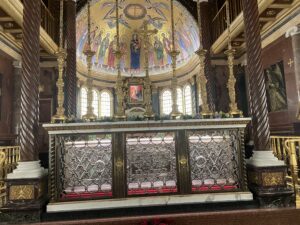
After studying in Rome under John Paul II and Benedict as popes, I was ordained a priest under Pope Francis. The bishop who ordained me a deacon was a good friend of Francis, and the Pope sent each of us a rosary blessed personally by him. My first Mass that I celebrated as a priest in Rome was at the altar to Our Lady in St. Mary Major’s Basilica, where Pope Francis visited over 150 times during his pontificate, and where he is to be buried. His unofficial motto – “a Church focused outwards”, towards the world – marked my first 10 years as a priest. My first Mass upon returning to Mexico City as a priest in early 2015 was at the city dump here, followed by my first 13 baptisms for the poor who rummage through trash to find food and a living. As a Francis priest, I felt called to go out to the outskirts of society, to make God present there for his poor. Likewise the earthquake here in 2017 was another Francis moment for me: helping volunteers and families of victims, I understood the wisdom of the Pope’s invitation: “approach others’ suffering with feet bared, for it is sacred ground.” In that sense, Francis was the Pope of the Vatican II Council: he put into practice the council’s invitation to establish a better dialogue with modern society, and not get so lost in internal bickering and hair-splitting.
When Pope Benedict XVI resigned in 2013, the cardinals who were to elect his successor knew the next pope would have to face head on the challenges that – in part – led Ratzinger to step down. Those challenges regarded above all the governing body of the
Catholic Church, called the Roman Curia, in the Vatican. As one cardinal put it afterwards, they elected Pope Francis for his no-nonsense governing style, without knowing that he would be such a rockstar with the public. Bergoglio took this task of reforming the Curia quite seriously, and made several important reforms over his 12 years as pope. When he spoke to lay Catholics and the public, he came off as very understanding of their everyday challenges; that was certainly not the case when he spoke to us clergy and religious. He had a serious, no fooling around mode that kicked in periodically, and he could be very harsh in reprimanding the sins of the hierarchy. Whether or not he has completely reformed the Curia, I definitely could not say: lucky for everyone, especially me, I am NOT a part of that organ.
I do know that being run by Italians for the most part, and given their tendency towards favors and overlooking dubitable deeds that so allows the mafia to thrive so much in their culture, reform will be an ongoing issue. So while time will tell whether Francis’ governing mechanisms and decisions were correct, at least he dedicated lots of energy to reforming a 2,000-year-old institution.
Where many Catholic circles have bones to pick with this pontificate has to do more with Francis’ moral teachings. For instance, two Vatican documents published under Pope Francis within two years of each other regarding homosexual marriage for Catholics seemed to contradict each other. First, no Catholic minister could bless a homosexual couple, so as to avoid confusion about them being somehow married in the Church. But then it was decided that in certain circumstances, as a blessing of persons – not as a couple – a priest could indeed give a blessing. The final call is still unclear regarding the matter. Other issues such as
ordaining women ministers and giving communion to the divorced and remarried were constant thorns, if not in Francis’ side, certainly for plenty of Catholics. After clearcut orthodoxy under John Paul II and Benedict XVI, Catholic teaching now seemed to be quite versatile on subjects that seemed pretty much set. I include myself among those confused at times with certain statements and gestures under Francis’ reign. I certainly accept his authority as Vicar of Christ on earth, with no doubts in my mind; however I have had to make a conscious effort in making sense of topics that, yes, to the general public seem quite minor, but for a priest, involved deeper issues God’s revelation in the Church that need proper understanding.
Let me be perfectly clear: only Francis himself knew what he was about when he published those statements; I definitely have no direct insight into his intentions. I will share a few ideas that have helped me make sense of his at times bewildering stances. First of all, Bergoglio is a Jesuit, with all the impressive cultural and historical pondus that involves, alongside the not so glorious side of their method and mindset. From what I have been able to gather in dealing with a few Jesuits, they can come off as politically correct, hard to pin down, never giving a black or white answer: they try to capture reality in all its complexity, which goes beyond so many of our prejudiced mental models. So as a Jesuit, Francis loved to spark debate about a given issue, in order to gain other points of view than the cut and dry. Besides being a Jesuit, Bergoglio had little experience beyond Argentina (which explains his
– to Americans incomprehensible – aversion to capitalism, given his country’s economic history). While Woytla was forged under Communist regimes in Poland, and Ratzinger had 20 years of global perspective working in Rome before becoming pope, I get the feeling that Francis did not always realize the global impact and implications that his words and gestures had. Nor did he always weigh the sense of instability his Jesuit approach could raise among the faithful. Again, this is my personal take on Francis’ stance on certain sensitive issues; Francis will have to answer to his conscience and his Creator.
I believe the overall takeaway from this papacy for me would be the aspect of “pastoral.” As the universal shepherd of the Catholic Church, Bergoglio showed us that while the Church does possess divinely inspired truth, as she presents that truth to individual
people, like a good mother and shepherd the Church must take into account their personal situation at the moment. This is known as a gradual approach, rather than touting the whole Gospel truth and forcing it on those who are only just starting their journey towards the faith. Francis has definitely shown us how to show genuine pastoral interest in men and women who are searching for happiness in today’s world. Perhaps as Church, we must keep this pastoral approach balanced with a clearer sense of what core values we hold dearest: there is a danger in being so open and gradual in our presenting the truths of the faith that the Truth becomes lost or disguised. That would mean losing the one unique thing we are called to offer today’s world: the Truth of Jesus Christ.
I personally thank God for giving the Church Pope Francis as the Vicar of Christ these 12 years, especially regarding these two points: directing the Church out towards today’s world, and creating a debate on what is truly essential to following Jesus and how to present that attractively to men and women. May the Risen Lord, who called Francis to himself this Easter octave, grant him His eternal Mercy, and bring him to his home; and may the entire Church continue to follow Her Lord as He continue to guide us all towards our heavenly home.