por YakamÍ Machado | Abr 9, 2021 | Cuento, Infancias, Literatura, Minificción
Ya estábamos hartos. Todos los recreos eran lo mismo con Octavio. Sus zancadas de mamut sacudían todo el polvo del patio mientras pedía a cada miembro del grupo un arancel de bocadillos para saciar su hambre prehistórica. Si vieran lo flaquito que me había puesto por no comer bien, porque a mí era el que me quitaba todo el sandwich de huevo con longaniza que con tanto amor me preparaba mi mami. Pero ya no lo iba a permitir, tenía un plan. Me acabé a bocaditos mi sandwich durante las clases y sólo dejé uno especial que había preparado con todas las salsas habidas y por haber que me encontré en mi casa.
Llegó la hora. El mastodonte caminaba por la llanura. Yo no esperé mucho. Valientemente, lo intercepté y le ofrecí mi comida. Él me la arrebató de un golpe y se la metió toda en su boca de rana. Sus ojos casi se le salían. Escupió mi trampa y se fue corriendo a los baños a quitarse el picor con un buche. Todos reíamos. Sin embargo, el júbilo duró poco. La bestia trotaba fúrica desde lo lejos con las carnes zangoloteándole por todo el cuerpo. No lo pensé dos veces y me eché a correr. Corrí y corrí sin mirar atrás. Creo que le di como ocho vueltas a la escuela. De pronto, choqué y caí al suelo. Me levanté rápido y miré con asombro que había colisionado con el mismísimo Octavio, quien sólo había podido arrastrar su humanidad durante medio pasillo antes de desfallecer en el piso ¿Por qué nunca lo pensamos?
A partir de ese día, nunca más volvió a quitarnos la comida, sólo teníamos que correr tres cuartos de pasillo, y él se quedaría tirado todo el resto del recreo. Tuvimos un final feliz. Lo malo es que nuestra estrategia tenía un límite. Cuando nuestro amigo se vuelva más rápido gracias a la dieta y el ejercicio al que lo sometimos, necesitaremos otro plan.
por YakamÍ Machado | Feb 20, 2021 | Cuento, En letra viva, Literatura, Minificción, Odi et amo
¿Español?
It has been five years since Alberto decided to become a poet. He wanted to leave the rough world of advertising and design. This was thanks to the fact that he rescued a photo of his late mother, where she appeared lulling him with poems by Antonio Machado and Xavier Villaurrutia. He explored the depths of his experiences, read books on mythology and history from all over the world and found some symbolism that he developed during a whole collection of poems.
His goal was not to send his texts to contests. He did not trust the judgments of those elites and governments whose prizes seemed to have already been arranged in advance. He decided to jump straight to the people and put together a whole performance on his social networks. However, he soon realized that, as a writer, he didn’t generate the hook for people to pay attention to him. Moreover, his writings seemed an anachronism with respect to the trends of the literary market. He was a dull boy who had a happy childhood that does not sell or is not usually preserved in today’s scholarly libraries.
He decided to invent a character: Albermus. A sordid son of a prostitute who had to sell drugs to pay for his studies and read most of the dilapidated books in public libraries. His years of advertising had to be worth something.
The success was immediate. The stories of this character were very attractive and brought instant traffic. He soon saw how this avatar had brought him out of anonymity and made him an interesting person for all kinds of outreach materials.
One night, while writing an autobiographical book for a publisher who contacted him, he realized he was out of coffee, and went out to buy a packet at the store. No one attended to him. Everyone ignored him as if he were a ghost. He returned intrigued and admired to his horror that Albermus was in the room rewriting the book.
por YakamÍ Machado | Feb 20, 2021 | Cuento, En letra viva, Literatura, Nativitas
¿Español?
—Is it Christmas already?
I wondered when I saw that the detergent mascot was already wearing his Santa Claus suit on the packaging. On my cell phone I checked that it was already December. I looked around. Every aisle was decked out in all the classic colors and symbolism of the season.
I finished shopping and arrived at my apartment. Why hadn’t I noticed? How long had it taken me to finish that report? I looked at my altar for the day of the dead. The leaves of my cempasúchil flowers were completely dry and all my food had spoiled and worm-eaten. I put away the things in the pantry, got out the detergent and set about cleaning my mess.
As I picked up, I remembered that it hadn’t been one report, but a series of them that came out after the first of November. One after another. My feedings and departures were short, quick. After all, if I didn’t finish on time, I was going to lose my job because of the cutbacks they started making in the middle of this year. Being punctual and efficient was no longer good enough.
But is it really possible to live a month and a half away? Well, all my payments were directed to my credit card, and since I don’t have credit cards, I never had to go and pay, as my debts were automatically settled in my debit account that never lost funds because the company’s project deposits fell on it.
And the people around me? I opened my social networks and noticed that there were no notifications. I guess if you don’t write to your contacts, they forget you exist. Since I became forcibly independent, I became independent of human contact. Perhaps because the only people I had close relationships with were already in my altar. Wow, I could have died and no one would know, not even at work. They would fire me rather than investigate why I don’t answer messages. After all, in this day and age, what they want is to have pretexts to run people off and they don’t have time to worry about them.
I finished all my cleaning work. My apartment was beautiful. I sat down and looked out the window at the Christmas hustle and bustle downstairs.
—Aren’t you going to put up a tree?
—I don’t believe in God and I’m not Celtic… what is the point?
—If you don’t believe in God, why were you putting up an altar?
—Because while I’m putting it up I remember every single person there.
I got a lump in my throat.
—And don’t you have nice memories putting up the tree?
I smiled, went to the bedroom and looked for my mom’s Christ Child. I had kept it, I don’t know why. No, wait. I do know why! I just remember every twenty-fourth of December, my mom and dad cooed over their Christ Child. Suddenly, I couldn’t help crying. I kissed the child’s foot and walked around cooing to him.
—See, you can remember us with this too.
Why are these random memories the ones that make us cry the most when we get old?
por YakamÍ Machado | Feb 19, 2021 | Cuento, En letra viva, Espantos y ausencias, Literatura
¿Español?
A nurse from a French hospital was running down the corridor. In the distance, Professor Mauricio Martinez was walking towards the exit of the building.
—Professor, what are you trying to do?
—My family forgave me. I must go to Mexico to be with them.
—Sir, you are in no condition to take a flight. Your operation was delayed for November 5th and until then you must stay in bed.
—No, I can’t wait that long. By then the food will be cold.
—What about the plane he has to take to get there? You’re delirious from the anesthesia, sir. You’d better calm down.
—I’ve been living here for more than thirty years and I’ve never visited them. Filthy country. Filthy idiot family. I wanted all that to be as far away from my destiny as possible. To hell with Mexico.
—You were young. Don’t beat yourself up about your past. You’d better think about how to fix your future. And for that you must first recover.
—Guadalupe, that’s the name of the little daughter of my younger brother. And he already told her about me. She knows who I am. She even made me a special present she wants to give me. She’s very skilled with her hands.
—What if she talks to you on the phone tomorrow? She’ll tell you all about it later.
The nurse led him by the arm to his room. Suddenly, the alarm sounded. The staff rushed to the patient’s room. The nurse suspected that someone had already reported Mauricio missing.
—Don’t worry, I have Mr. Martinez here. The anesthesia is causing him delirium and he went to the hospital entrance.
When he arrived at the room, the body of the professor was lying lifeless on the bed, and the spirit he had detained was already on its way to the altar waiting for him in Mexico.
por YakamÍ Machado | Feb 19, 2021 | Cuento, México en el corazón, Minificción
¿Español?
—What?
—Get up! The bell rings. The priest is calling to mass.
—What? But have you seen the time? Why is he calling us?
—It must be something terrible.
The husband looked at his wife, caressed his head and embraced her tenderly when he saw her tremors.
—Calm down.
The husband and wife and the rest of the people arrived at the parish of the town of Dolores. The woman trembled and held her husband’s hand tightly.
—What’s the matter with you?
—Did you see who is there?
—Well, the priest, who else?
Few knew that the gods had become angry with the priest for wanting to change the necessary course of history to rescue the king of Spain. Therefore, they banished him from the earth and, as punishment, put in his place a former prisoner to lead the people in a bloody war. Everyone, except the woman, listened attentively to what that impostor (called Sisyphus in old times) commanded.
por Andrea Fajardo | Ene 20, 2021 | Cuento, En letra viva, Literatura, Minificción, Odi et amo, Uncategorized
«Ample make this bed. Make this bed with awe; In it wait till judgment break Excellent and fair.Be its mattress straight, Be its pillow round;
Let no sunrise’ yellow noise Interrupt this ground.»
Emily Dickinson
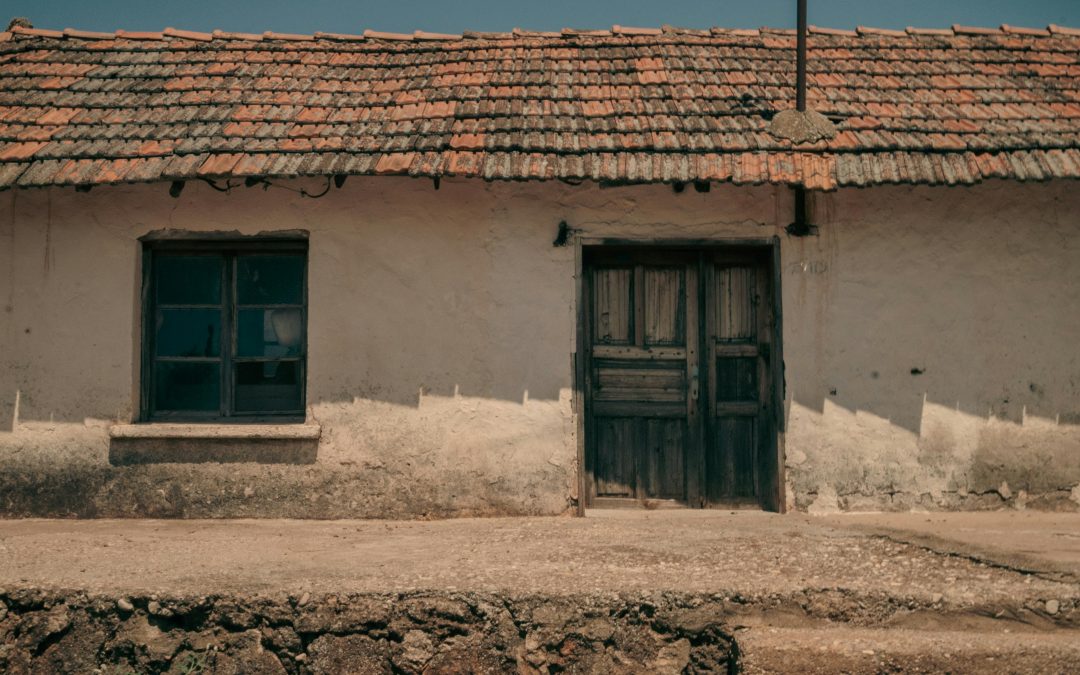
Érase una vez una familia que vivía al norte del país en una casa pequeña y sin divisiones. La mesa y un par de sillas antecedían la única cama. En la casa sin paredes interiores vivía un padre con sus tres hijos. Dos de sus hijos trabajaban un campo árido, mientras la única hija hervía frijoles en una cacerola. Todos dormían amontonados en la misma cama. Los roces y ronquidos eran inevitables.
Érase una vez un padre que vivía al norte del país, dueño de una casa sin paredes interiores. Padre de dos hijos y una hija. El padre no era ni viudo ni divorciado, pero no tenía mujer. La madre de sus hijos se marchó hace algunos años, nadie sabe algo de ella y si todavía vive debe encontrarse mucho mejor.
Érase una vez una madre que vivía al norte del país, vivía en una casa sin paredes interiores, cuidaba a sus tres hijos y trabajaba en una fábrica textil. Cuando su marido regresaba de la cantina, la golpeaba hasta dejarla inconsciente. Cuando el marido satisfacía sus puños, se marchaba con otra mujer, que tenía los ojos muy separados de la nariz y llevaba meses embarazada.
Érase una vez un hijo mayor que vivía al norte del país en una casa sin paredes, trabajaba un campo infértil mientras su hermana hervía frijoles y su padre borracho golpeaba a su madre hasta dejarla inconsciente. El hijo mayor siguió a su padre a la cantina. Los dos bebían, jugaban y subían las faldas a las mujeres. Cuando el padre regresaba a la casa a golpear a la madre, el hijo mayor se quedaba en la cantina y comenzaba la pelea entre borrachos.
Érase una vez un hijo que vivía al norte del país y compartía la única cama con toda su familia. Por el día trabajaba junto con su hermano mayor un campo infértil, mientras su hermana limpiaba la casa y hervía frijoles bayos, su madre se desgastaba en una fábrica textil y su padre bebía el dinero que ganaban. Su hermano siguió los pasos de su padre a la cantina, se emborrachaba, perdía el dinero apostando y siempre regresaba golpeado. Hasta que un día no volvió. El hijo recogió, junto con su madre, el cuerpo acuchillado y lo enterraron con los pocos ahorros que tenían.
Érase una vez una hija que vivía al norte del país en una casa sin paredes interiores, con una cama en el centro y un escusado en el rincón que hedía de la mañana a la noche. La familia dormía en la misma cama y el cuerpo de su madre se interponía entre los golpes, roces e intimidad. La hija se quedaba en casa limpiando e hirviendo frijoles mientras su hermano araba el campo, su madre cosía telas en una fábrica y su padre se emborrachaba. Cuando su hermano mayor fue asesinado, el padre borracho culpó a su madre y la golpeó hasta casi dejarla muerta. Cuando la madre se recuperó unas semanas después, empacó algunas cosas y se fue de la casa. No le importó la suerte de sus hijos. No dejó teléfono o dirección. No quería que la encontraran. Aunque, en realidad, nadie intentó buscarla.
Érase una vez un muchacho que trabajaba en el campo al norte del país. Su familia era pobre y sólo tenían una cama en la que todos dormían amontonados. Su padre golpeaba a su madre, hasta que un día ella se hartó y se fue de casa. Enterró a su hermano y, al día siguiente, fue a cosechar el maíz. El campo no se desgasta ni tampoco se enluta. Hacía mucho calor, y la cosecha era escasa. Se secó el sudor con unas manos rugosas como las de un viejo. Harto de su miseria, se decidió a cruzar la frontera. Cuando se fue nadie notó su ausencia, a pesar de que había más espacio en la cama.
Érase una vez un militar que hacía guardia en la frontera del país. Estaba harto del calor y la aridez de la tierra. Le pagaban por evitar el paso a los migrantes, aunque él mismo hubiera abandonado ese desierto. En su día de descanso, se iba a la cantina. Bebía y jugaba hasta el amanecer. Algunas veces detenía peleas de borrachos, pero, como no estaba de servicio, si alguno moría, se hacía de la vista gorda. Una noche particularmente violenta, unos jugadores se encendieron y acuchillaron a un muchacho. El militar siguió bebiendo. Pasados unos días volvió a la cantina y sintiéndose dadivoso, invitó una ronda a todos. Al día siguiente, regresó a su puesto con resaca. El calor infernal aumentaba su dolor de cabeza. Notó entre los matorrales movimiento y gritó. Nadie respondió. Una gota de sudor resbaló de su frente y entró a su ojo. Los matorrales se movieron. Otra gota entró a su boca seca y la saló. Disparó. Al atardecer, cuando el sol ya no calaba, arrastró el cuerpo de un muchacho con manos rugosas a la fosa común. Nunca reclaman esos cuerpos.
Érase una vez una virgen que vivía al norte del país. Desde hace meses, no sabe nada de su madre y su hermano, tampoco le importa. Ambos huyeron de su padre golpeador y borracho unas semanas después de que su hermano mayor fuera asesinado. Limpiaba el excusado y hervía frijoles. Por las noches, se acostaba al centro de la única cama, se estiraba y se alegraba por el espacio, ya no dormían amontonados. No había roces ni ronquidos. Podría decirse que era feliz, si no fuera porque extrañaba el calor de los cuerpos amontonados las noches en las que calaba el frío. Por las noches, se sentía la señora de la casa y de la cama. Durante el día evitaba mirarse al espejo, porque temía que su reflejo le mostrara la imagen de Satán.
Érase una vez un padre golpeador y borracho que vivía al norte del país en una casa sin paredes interiores. La mujer a la que golpeaba lo dejó, un hijo fue asesinado, del otro hijo no sabe nada y su amante, la mujer de ojos separados, se negó a compartir la cama e intimidad con su única hija. El padre no trabajaba y se la pasaba todo el día en la cantina. Cuando el cantinero ya no quiso fiarle, volvió a casa molesto, vio a su hija, que sin ser una belleza tampoco era del todo fea, y quiso golpearla aunque no lo hizo. Sobrio y molesto se acostó en la única cama con su hija. Al día siguiente, fue a la cantina, pero el cantinero lo rechazó. Porque si ayer no se fiaba y tampoco hoy, mucho menos se fiará mañana. El padre desesperado en su sobriedad, miró alrededor de la cantina y se sentó junto al militar que la semana pasada había invitado una ronda a todos. Ambos bebieron hasta la madrugada. El militar pagó la cuenta. El padre en agradecimiento y a cambio de futuros tragos le dio a su hija, asegurando que era virgen, pues él mismo velaba su sueño en la misma cama.
Érase una vez un militar que hacía base al norte del país. No tenía amigos ni familia; así que, en su día libre, se iba a la cantina hasta el amanecer. En una ocasión, pasada la media noche y después de varios tragos de aguardiente, se fue a la casa de su nuevo compadre. La casa no tenía paredes interiores y sólo había una cama, en la que dormía la hija del anfitrión. El padre se acostó en la orilla de la cama sin dar la espalda a su hija y al militar. Prefería mirar. Su hija virgen y prácticamente huérfana yacía entre ambos hombres. El militar cobró la cuenta del aguardiente.
Érase una vez una hija al norte del país que vivía con su padre borracho en una casa sin paredes interiores y yacían en la misma cama. Una mañana lavó la sábana con su sangre y semen de un militar que cobró la cuenta de la cantina de su padre. A partir de ese día, una vez por semana, pagaba el aguardiente que su padre bebía. En una única cama yacía la hija con los dos hombres, hasta que un día su vientre empezó a crecer.
Érase una vez un niño, concebido al norte del país, en una tierra abandonada por Dios y por el diablo, que sabrá muy bien quién es su madre, una joven que hierve frijoles por la mañana y por las noches paga la cuenta de la cantina. Lo que el niño no sabrá es si su padre es un militar o si su padre es a la vez su abuelo. Quizá su madre sea a la vez su hermana y su padre un borracho golpeador.
Érase una vez una familia al norte del país y, si no han muerto, entonces seguirán viviendo en una casa sin paredes interiores y durmiendo en una misma cama.


